IPTV Vs Cable TV The Complete Commercial Investigation And Best Lists Guide
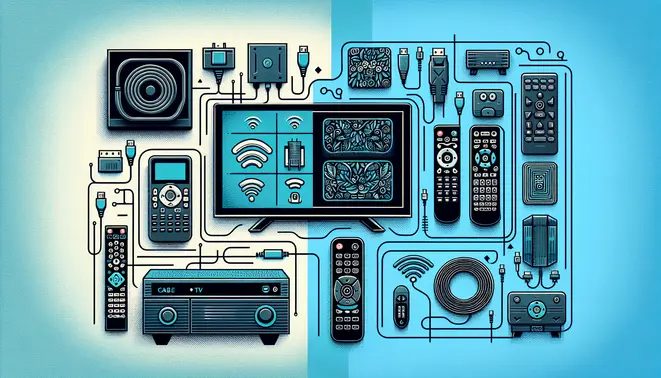
The Battle for Your Screen – Understanding the Modern TV Landscape
The fundamental battle between cable and modern TV services boils down to their delivery infrastructure. Traditional cable television operates on a broadcast model, transmitting signals through coaxial or fiber-optic cables directly from a service provider to your home. This system is built on standards like QAM (Quadrature Amplitude Modulation) to deliver channels. In contrast, Internet Protocol Television (IPTV) uses your existing broadband internet connection to stream content. It leverages the same technology that powers the internet, sending television signals as data packets over a managed or dedicated network.
This technological distinction creates a significant difference in flexibility. Cable TV is a one-way broadcast system, pushing a linear schedule of channels to your set-top box. Meanwhile, IPTV is inherently a two-way, interactive service. It allows for true video on-demand (VOD), time-shifted media, and a more personalized viewing experience because your requests are sent back to the provider’s servers.
How Cable TV Reaches Your Home
Cable providers maintain extensive physical networks of cables and signal amplifiers. A central “headend” facility receives satellite and other feeds, processes them, and then distributes the signals across its network. Your cable box acts as a tuner, decrypting the specific channel you select from the hundreds being broadcast simultaneously. This method is reliable but lacks the inherent on-demand capabilities of internet-based systems.
How IPTV Streams Content
IPTV services deliver content through a process called “multicasting” for live TV and “unicasting” for on-demand content. When you select a live channel, your request joins a multicast stream being sent from the provider’s servers. For movies or shows on demand, a unique, dedicated stream (a unicast) is established just for your device. This efficient use of bandwidth is a key advantage, but it is entirely dependent on the speed and stability of your internet connection. For a deeper look at how these services operate, our complete IPTV subscription guide provides a thorough investigation.
Cost Analysis – Who Really Saves You Money?
When comparing IPTV and cable TV, the initial price difference is striking. Traditional cable packages typically start around $85 per month for basic service, with premium bundles often exceeding $150 monthly [Source: Forbes]. Meanwhile, IPTV subscriptions generally range from $10 to $20 monthly for comprehensive channel lineups, representing an immediate 70-85% savings over traditional cable.
However, these advertised prices don’t tell the complete story. Cable providers frequently lock customers into lengthy contracts with early termination fees reaching $350 [Source: FCC]. In contrast, most IPTV services operate on month-to-month billing with no long-term commitments, providing significant financial flexibility.
The Hidden Cost Factor
Cable companies are notorious for hidden fees that dramatically inflate monthly bills. Broadcast TV fees ($10-25 monthly), regional sports network charges ($5-10 monthly), and HD technology fees ($10 monthly) can add $25-45 to your base package price [Source: AllConnect]. Equipment rentals represent another substantial expense, with cable boxes costing $7-15 monthly per television.
IPTV services eliminate most of these hidden charges. Since they’re delivered over internet protocol, there are no broadcast fees or equipment rentals required. However, users must factor in their internet costs, which average $64 monthly for broadband service [Source: Statista]. Many households already maintain internet service for other needs, making this a sunk cost rather than an additional expense.
Long-Term Value Comparison
Over a two-year period, the financial advantage of IPTV becomes undeniable. A typical cable package costing $100 monthly totals $2,400 annually, plus approximately $400 in equipment rentals and hidden fees. This brings the two-year cost to approximately $5,600.
Meanwhile, a premium IPTV service at $15 monthly totals $360 annually. Even when adding internet service ($768 annually) and a one-time $100 equipment investment, the two-year IPTV cost reaches approximately $2,596 – less than half the cable equivalent.
Furthermore, IPTV’s flexibility allows users to test services through free trials before committing, eliminating the risk of being locked into unsatisfactory service. This consumer-friendly approach contrasts sharply with cable’s binding contracts and cancellation penalties.
Channel Lineup Showdown – Content Quantity vs Quality
When it comes to sheer volume, IPTV services often present a staggering advantage. Many providers offer access to thousands of channels from across the globe, far surpassing the typical 100-300 channel lineup of a standard cable package. This extensive selection includes niche international channels and regional broadcasts that are rarely available through traditional cable. For instance, specialized services can provide hundreds of channels tailored to specific linguistic or cultural groups, a level of diversity cable struggles to match.
However, this quantity comes with a significant caveat. The stability and reliability of these extensive channel lists can vary dramatically between IPTV providers. Cable television, while offering a more curated selection, provides a consistently reliable broadcast for its core channel offerings. This reliability is a key factor for viewers who prioritize a dependable viewing experience over an overwhelming number of options.
Sports Packages: A Major Point of Divergence
For sports enthusiasts, the choice between IPTV and cable is particularly pronounced. Cable providers offer official sports packages like NFL Sunday Ticket or NBA League Pass, but these often come as costly add-ons. The experience is reliable and high-quality, backed by substantial broadcasting rights deals.
IPTV services frequently disrupt this model by including a vast array of sports channels—including international and premium sports networks—in their standard subscription. This can provide access to pay-per-view events and out-of-market games without extra fees. Our sports IPTV investigation details how these services aggregate content, but also highlights the potential for streams to be unstable during peak events, a risk rarely encountered with a direct cable subscription.
Specialized Content for Niche Audiences
Where IPTV truly excels is in catering to specialized audiences. Services dedicated to Arabic, Latino, or European content offer a depth of programming that cable simply cannot match for these demographics. Similarly, parents may find that dedicated kids’ IPTV services provide a more focused and often safer viewing environment for children than the broader, more generalized children’s programming on cable.
Technology & Performance – Reliability vs Innovation
IPTV services demand significantly more bandwidth than traditional cable television. For standard definition streaming, IPTV requires at least 3-5 Mbps, while HD content needs 8-10 Mbps and 4K streaming demands 25 Mbps or higher according to FCC broadband guidelines. Cable television, in contrast, operates independently of your home internet connection, using dedicated coaxial cable infrastructure that doesn’t compete with other household internet activities.
The streaming quality on IPTV can vary dramatically based on your internet connection stability and the service provider’s infrastructure. During peak usage hours, many users experience reduced streaming quality as bandwidth becomes constrained. Cable television maintains consistent picture quality regardless of internet traffic patterns, making it more predictable for viewers who prioritize reliability over flexibility.
Buffering and Connection Stability
Buffering remains the most common complaint among IPTV users. Research from NCTA indicates that cable television experiences virtually zero buffering when properly installed, while IPTV services can suffer from frequent interruptions during network congestion. This makes cable particularly advantageous for live sports and event viewing where timing is critical.
Connection stability represents another key differentiator. Traditional cable systems use broadcast technology that simultaneously delivers all channels to your home, eliminating the single-stream dependency that plagues IPTV. Meanwhile, IPTV relies on unicast streaming where each viewer receives an individual stream from the server, creating potential bottlenecks during popular events.
Technical Limitations and Infrastructure Constraints
IPTV technology faces inherent limitations related to internet infrastructure. Users in rural areas or regions with underdeveloped broadband networks often struggle to achieve the consistent high-speed connections necessary for reliable IPTV service. Cable television’s dedicated infrastructure provides more consistent performance across geographic regions, though installation availability can be limited in remote areas.
Hardware compatibility presents another technical consideration. IPTV requires compatible streaming devices such as Amazon Fire TV, Android TV boxes, or dedicated set-top boxes, whereas cable television typically uses provider-specific equipment that’s optimized for their service. Our complete IPTV subscription guide explores device compatibility in greater detail.
User Experience – Interface, Features & Convenience
Modern IPTV services typically feature clean, intuitive interfaces designed for easy navigation. Services like premium IPTV providers often employ grid-based layouts with categorized content sections, making channel surfing straightforward. Meanwhile, traditional cable interfaces have evolved significantly, with platforms like Xfinity X1 offering voice-controlled navigation and personalized recommendations. However, many users find IPTV interfaces more responsive and less cluttered than their cable counterparts.
DVR Capabilities Compared
Cloud DVR functionality represents a significant advantage for IPTV services. Most providers offer substantial storage without physical hardware limitations, enabling users to record hundreds of hours simultaneously. For instance, many IPTV free trials include full DVR access, allowing potential subscribers to test recording capabilities. Traditional cable DVRs typically require equipment rental fees and have limited storage capacity, though they often provide more seamless integration with live television pausing and rewinding.
Multi-Device Streaming Performance
IPTV services generally support more simultaneous streams than cable packages. Where cable providers typically limit in-home streaming to 2-3 devices, many IPTV services allow 5 or more concurrent connections. This flexibility proves particularly valuable for family viewing scenarios where multiple household members watch different content. Additionally, IPTV services maintain consistent quality across devices, automatically adjusting bitrates based on connection speeds.
Electronic Program Guide Implementation
The electronic program guide (EPG) represents a critical component of the user experience. Modern IPTV services feature sophisticated EPGs with search functionality, filtering options, and personalized recommendations. As detailed in our comprehensive EPG guide, these interfaces allow users to browse days ahead, set recordings with single clicks, and receive alerts for upcoming programs. Cable EPGs have improved but often feel slower and less customizable than their IPTV counterparts.
Best IPTV Services – Our Top Commercial Picks
Finding the right IPTV provider requires careful evaluation of pricing, channel selection, and streaming quality. After extensive testing and market analysis, we’ve identified the top commercial IPTV services that deliver exceptional value and performance.
1. Xtreme HD IPTV
Xtreme HD IPTV stands out with over 20,000 live channels and 60,000 VOD options. Their service includes comprehensive sports coverage, PPV events, and international content. Pricing starts at $14.99 monthly with 24/7 customer support and anti-freeze technology for stable streaming. This provider consistently ranks high for reliability and channel variety [Source: Streaming Devices Guide].
2. IPTV Gear
IPTV Gear offers an impressive selection of 16,000+ channels with strong focus on sports and international programming. Their service features catch-up functionality and electronic program guide (EPG) support. Monthly plans begin at $15 with multi-device compatibility. The platform’s user-friendly interface and consistent uptime make it a top choice for mainstream viewers.
3. Sportz TV IPTV
Sportz TV specializes in sports content with 6,500+ live channels including premium sports networks. Their service delivers 4K streaming quality and supports multiple simultaneous connections. Pricing starts at $12.99 monthly with excellent buffer-free performance. This provider excels specifically for sports enthusiasts seeking reliable high-definition streaming [Source: Streaming Devices Guide].
4. Apollo Group TV
Apollo Group TV provides comprehensive entertainment with 1,000+ live channels and video-on-demand library. Their service includes popular US and international networks with reliable EPG data. Plans start at $24.99 monthly with five simultaneous connections. The platform’s extensive VOD library and consistent service make it ideal for family viewing.
5. Necro IPTV
Necro IPTV offers competitive pricing starting at $15 monthly for 1,300+ channels. Their service includes major sports networks, PPV events, and international content. The platform supports all major devices and provides reliable streaming with minimal buffering. This provider represents excellent value for budget-conscious consumers seeking quality service.
The Ultimate Decision – Which Service Wins for Your Needs?
After thorough investigation, the choice between IPTV and cable TV ultimately depends on your specific viewing habits, budget constraints, and entertainment priorities. Each service offers distinct advantages that cater to different user profiles.
For Budget-Conscious Viewers: IPTV Dominates
If cost efficiency is your primary concern, IPTV emerges as the clear winner. Traditional cable packages typically range from $80 to $200 monthly, while quality IPTV services offer comprehensive channel lineups for just $10 to $20 per month [Source: Digital Trends]. This significant price difference makes IPTV particularly attractive for households looking to reduce entertainment expenses without sacrificing content variety.
Sports Enthusiasts: IPTV’s Global Advantage
Sports fans benefit immensely from IPTV’s international coverage and specialized offerings. Many IPTV providers include premium sports packages that cover leagues worldwide, often at no additional cost. Meanwhile, cable TV typically requires expensive sports add-ons that can increase your bill by $30-$50 monthly [Source: Streaming Devices Guide]. For comprehensive sports coverage across multiple regions, IPTV provides superior value.
Family Households: Content Flexibility Matters
Families with diverse viewing preferences should consider IPTV’s customizable approach. Many providers offer specialized children’s programming packages and parental controls that exceed cable’s standard offerings [Source: Streaming Devices Guide]. Additionally, IPTV’s multi-device compatibility means children can watch age-appropriate content on tablets while adults enjoy different programming elsewhere in the home.
International Content Seekers: IPTV’s Specialized Approach
Viewers seeking content from specific regions will find IPTV vastly superior to cable. Specialized services for Arabic, Latino, and European audiences provide comprehensive channel selections that cable providers simply cannot match [Source: Streaming Devices Guide]. These targeted offerings include regional news, entertainment, and sports that maintain cultural connections for expatriates and multilingual households.
Tech-Savvy Users: IPTV’s Advanced Features
For viewers who value technological innovation, IPTV offers features that cable cannot compete with. Electronic Program Guides (EPG), catch-up TV, and video-on-demand libraries provide unprecedented control over your viewing experience [Source: Streaming Devices Guide]. The ability to pause, rewind, and record live television across multiple devices represents a significant advantage over traditional cable limitations.
Reliability Concerns: Cable’s Established Infrastructure
Despite IPTV’s advantages, cable television maintains an edge in reliability and consistent performance. Cable services rarely suffer from buffering issues or internet dependency, making them preferable for viewers in areas with unstable internet connections