Firestick Setup Complete Streaming Device Setup Guide
Unboxing Your Firestick – What’s Inside the Package
Opening your new Amazon Fire TV Stick reveals several essential components designed to deliver a complete streaming experience. The main device itself is a compact streaming stick that houses the processor and Wi-Fi antenna, with modern models like the Fire TV Stick 4K Max supporting high-definition and 4K Ultra HD content[1].
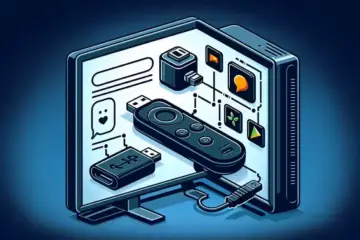
Your package includes crucial accessories for power and control: a USB cable, power adapter, and the Alexa Voice Remote. The remote features dedicated buttons for power, volume, and mute control of compatible TVs, plus a microphone button for hands-free voice commands[1].
A small but valuable inclusion is the HDMI extender cable, which serves dual purposes: improving Wi-Fi signal strength by positioning the device away from metal TV backs and providing extra space in crowded HDMI ports[1]. Finally, the package contains a quick start guide and directs users to the official Amazon Fire TV support page for detailed assistance[1].
Hardware Connections – Plugging Everything In
Begin setup by locating an available HDMI port on your television and firmly inserting the Firestick. If space is tight or you experience Wi-Fi interference, use the included HDMI extender for better positioning[2].
Proper power connection is crucial for stable operation. Connect the USB cable to the Firestick and plug the adapter into a wall outlet, avoiding TV USB ports which often provide insufficient power[2]. Always use the official power adapter, especially when streaming 4K content, to prevent performance issues.
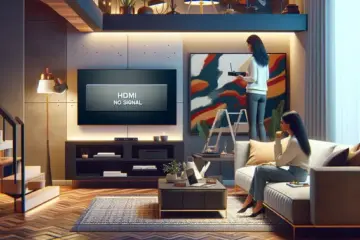
After connections are secure, turn on your TV and select the corresponding HDMI input. If you encounter a “No Signal” message, verify all connections, try a different HDMI port, or temporarily unplug the Firestick from power[2]. For comprehensive setup guidance, consult our complete streaming devices guide[2].
Initial Setup & Wi-Fi Configuration
The initial setup wizard guides you through language selection and Wi-Fi connection. Select your network from the detected list, preferring 5GHz bands for faster speeds or 2.4GHz for better range[3]. Carefully enter your Wi-Fi password, using the “Show Password” feature if available to avoid errors.
For optimal performance, position your Firestick within 30 feet of your router with minimal obstructions. If connection problems occur, restart both your router and Firestick, and verify other devices can connect to the same network[3].
Advanced troubleshooting includes forgetting the network and reconnecting, checking router settings for device blocks, and using Wi-Fi analyzer apps to identify less congested channels[3]. For persistent issues, consider a Wi-Fi extender or mesh network system to improve coverage[3].
Amazon Account Registration & Activation
To register an Amazon account, visit the Amazon website or app, click “Account & Lists,” and select “Create your Amazon account.” Provide your name, email or mobile number, and create a secure password, then verify your identity with the code Amazon sends[4].
Link your account to the Firestick by navigating to Settings > My Account > Amazon Account > Register. Enter the displayed code at amazon.com/code using a separate device[4]. This one-time process enables personalized recommendations, synchronized watch history, and simplified subscription management.
Account integration enhances security by allowing you to monitor and deregister devices from your Amazon account page online[4]. It also facilitates exploring streaming options like IPTV free trials through the Amazon Appstore[4].
Essential App Installation & Customization
Begin with foundational apps like Netflix, Disney+, Amazon Prime Video, and YouTube. For live TV, consider Hulu + Live TV, YouTube TV, or Sling TV, and don’t overlook free services like Tubi and Pluto TV[5].
Organize your home screen by dragging frequently used apps to the top row and creating folders for categories like sports or news[5]. Personalize your experience by adjusting display settings to enable 4K, HDR, or Dolby Vision, and create separate user profiles for household members.
For expanded content options, our complete IPTV subscription guide provides comprehensive service comparisons[5]. Regularly check for software updates to access new customization features that enhance your viewing experience.
Remote Control Mastery & Voice Commands
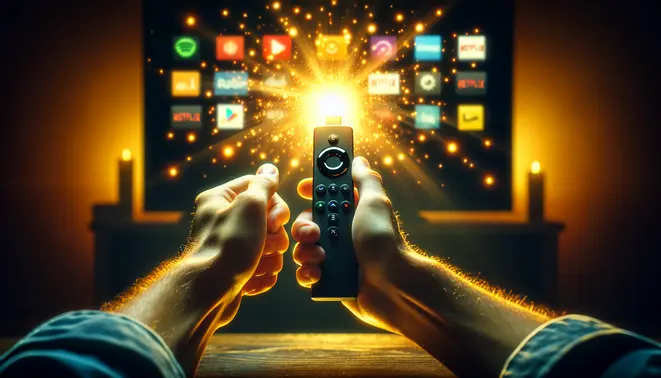
Modern Fire TV remotes include dedicated service buttons, voice search, and TV control functions. Utilize long-press features, such as holding the home button for quick settings access[6].
Essential functions include voice search across platforms, programmed volume/power control, app shortcuts, and navigation gestures[6]. For Alexa integration, ensure your Firestick and Echo devices share the same Wi-Fi network and enable Video Skills for each streaming service through the Alexa app.
Key voice commands include: “Alexa, play [show] on Netflix,” “Alexa, fast forward 2 minutes,” and “Alexa, what did they say?” to rewind with captions[6]. According to Amazon’s official documentation, these work across most Fire TV devices[6].
Advanced techniques include keyboard shortcuts via smartphone apps, universal watchlists, parental control PINs, and data saving modes[6]. Research from Consumer Reports shows that mastering remote capabilities significantly improves streaming satisfaction[6].
Advanced Settings & Troubleshooting Tips
Optimize display by enabling 4K resolution, HDR for enhanced contrast, and matching refresh rates to content[7]. Manage limited storage by clearing cache files, uninstalling unused apps, and using external or cloud storage when possible.
Implement parental controls through user profiles with content restrictions and PIN codes for apps or purchases[7]. Combine device-level and service-specific controls for comprehensive family protection.
For network issues, move the device closer to the router, use Ethernet connections, or reboot equipment. Configure router Quality of Service (QoS) to prioritize streaming traffic, especially when using IPTV services[7].
Solve audio-video sync problems by adjusting audio delay settings, and address app crashes by clearing cache or reinstalling[7]. As a last resort, perform a factory reset after backing up settings.
Sources
- Amazon – Fire TV Stick 4K Max
- Amazon – Amazon Fire TV Support Page
- Amazon – Amazon’s Official Documentation
- Consumer Reports – How to Use Your TV Remote More Efficiently
- Streaming Devices Guide – Best IPTV Subscription Complete IPTV Subscription Guide
- Streaming Devices Guide – Complete Streaming Devices Guide
- Streaming Devices Guide – IPTV Free Trial The Complete Guide to Choosing Your Subscription